


Beta-mannans are a problem for poultry production.
Hemicell™ XT is the solution.
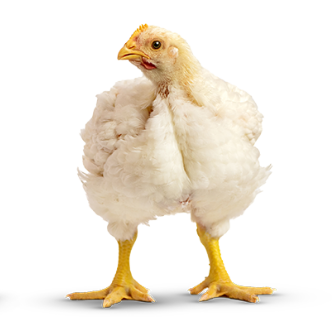





What are beta-mannans?

Naturally occurring feed compounds found in all vegetable-based animal diets1,2

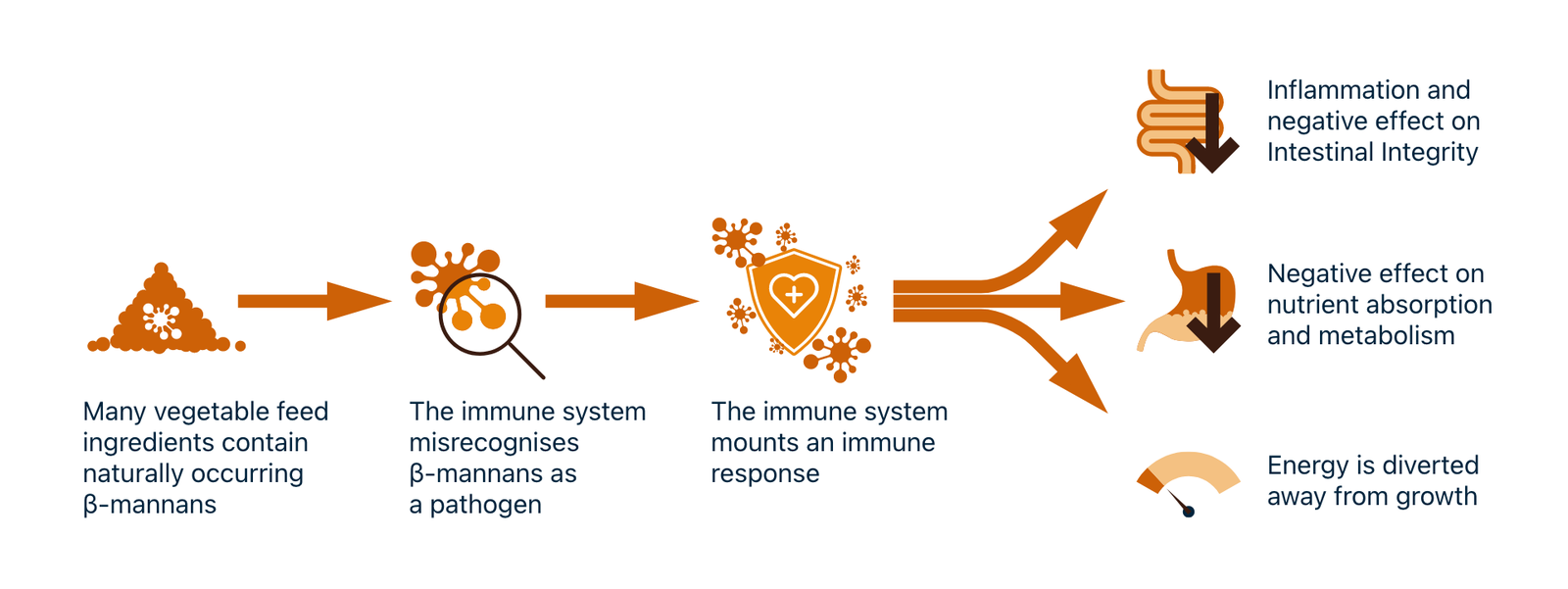
Have a molecular pattern that is similar to some pathogens, prompting an unnecessary immune response (FIIR)3-7
- Diverts energy away from growth
- Reduces gut heath and function

Cannot be broken down naturally in the gut

Resistant to feed processing procedures, such as pelleting and extrusion
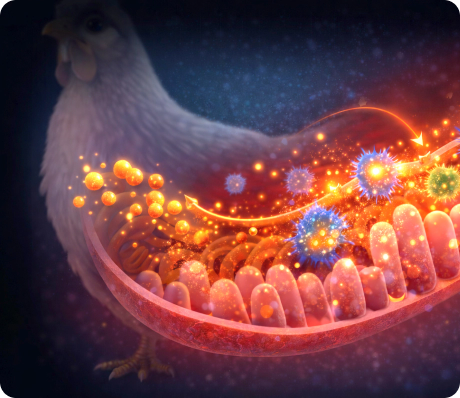
The feed-induced immune response (FIIR)3-7:
Access our study data page for more information
- Hsiao, H., Anderson, D. and Dale, N. 2006. “Levels of β-mannan in Soybean Meal.” Poultry Sci. 85:1430- 1432.
- Ferrel, J., Anderson, D, and Hsiao, H.-Y. 2014. “Content of Soluble Non-Starch Polysaccharides β-Mannan and Xylan in Legume Meals, Non-Legume Meals, and Cereal Grains or Cereal Grain By-Products.” Journal Animal Science, 92: Abstract #328
- Song W, et al. (1995) A Receptor Kinase-Like Protein Encoded by the Rice Disease Resistance Gene, Xa21. Science. 270: 1804-1806.
- Beutler B, et al. (2006) Genetic Analysis of Host Resistance: Toll-Like Receptor Signaling and Immunity at Large. Annu. Rev. Immunol. 24: 353-389.
- Ausubel F. (2005) Are innate immune signaling pathways in plants and animals conserved? Nature Immunol. 6(10): 973-979.
- Didierlaurent A, et al. (2005) Innate and acquired plasticity of the intestinal immune system. Cellular and Molecular Life Sciences. 62: 1285-1287.
- Stahl P, Ezekowitz R. (1998) The mannose receptor is a pattern recognition receptor involved in host defense. Curr. Opin. Immunol. 10(1): 50-55.Song W, et al. (1995) A Receptor Kinase-Like Protein Encoded by the Rice Disease Resistance Gene, Xa21. Science. 270: 1804–1806.
